
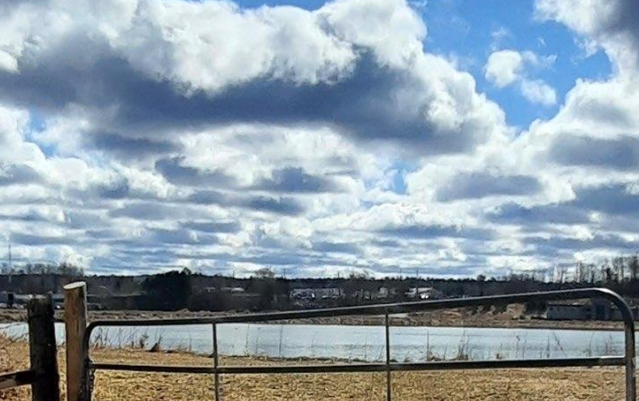
Recent samples taken from hauled septic discharges have identified extremely high chloride concentrations being discharged into Muskoka sewage lagoons.
District staff raised the issue at a joint Engineering and Public Works and Finance and Corporate Services meeting held on Oct. 22, 2025.
They said monitoring had revealed extremely high chloride concentrations, in some cases over 200,000 mg/L, far exceeding levels typically found in hauled residential sewage of about 100mg/L.
“At these concentrations, even small volumes of hauled sewage can have a significant impact on the receiving water bodies and downstream,” notes the report from Michael Currie, District Director of Water and Wastewater Services.
Although the nature of the high levels will be further investigated, Currie noted the samples appear to be “related to de-icing chemicals used in commercial portable toilets and some commercial operations. These chemicals, often based on sodium or magnesium chloride (similar to de-icing chemicals used for winter maintenance), are discharged directly with hauled waste and ultimately into the environment,” he noted in his report, which recommended initiatives that would provide greater scrutiny.
Currently, septic haulers report hauled sewage volumes and contents at the time of disposal with limited verification. “This reliance on the “honour-system” has been identified in MECP [Ministry of the Environment, Conservation and Parks] and staff reviews as a vulnerability, as inaccuracies are suspected,” noted Currie. “Compounding this issue, security at lagoon sites is currently limited to basic lock-and-key access. This approach allows haulers virtually unlimited and unmonitored entry, with no reliable means of confirming who has accessed a site, when loads were delivered, or whether the reported volumes are accurate.”
The report recommended that hauler agreements be reviewed and standardized, as well as the introduction of secure receiving equipment, “allowing volumes, contents, and hauler identity to be
verified and automatically logged, with non-compliant loads subject to penalties following an education first approach.”
According to Currie, the new receiving units will enable the District to:
- Control site access via secure keypad identification.
- Measure volumes with integrated flow meters.
- Sample each load automatically with refrigerated composite samplers.
- Grind waste to emulsify solids, improving lagoon treatment efficiency.
- Screen out rocks and inorganics, reducing maintenance costs.
The upgrades are expected to cost an estimated $250,000 per site, notes the report, which adds that “sufficient funds exist within the current capital plan allocation and Environmental Reserve to support these compliance-related activities.”
Discussions at the meeting also focused on increasing the capacity of the District’s wastewater treatment plants so they can receive hauled sewage more safely than septic lagoons, which offer limited treatment. Currie said the capacity is not currently there. “It’s kind of an incremental move toward treatment at larger facilities first, shore up the smaller facilities, and increase their capacity before we’re able to really get away from the lagoon technology.”
James Steele, Commissioner of Engineering and Public Works, said there are concerns about the longer distances haulers would have to travel to reach wastewater treatment plants, but noted that a lower rate could be an incentive to do so.
Steele said that’s one of the options that will be looked at on a long-term basis.
Councillor Terry Glover asked whether new sewage haulers could be required to discharge at plants instead of using lagoons. “I’m very concerned for lagoons in and around Muskoka and how close they are to our watershed.”
Steele said haulers are licenced through the Ministry of the Environment. “They have to apply to us to use the lagoons, and so we could include, or request, or have that conversation that perhaps if they’re a new applicant, direct them to wastewater plants. That is certainly an option for us, and we can see what that looks like, perhaps on a case-by-case basis.”
Steele also said staff would be working with the industry representative.
Want to dig deeper? You can find the report HERE (PDF)
Don’t miss out on Doppler!Sign up here to receive our email digest with links to our most recent stories.
Local news in your inbox six times per week!
Click here to support local news

0 Comments