
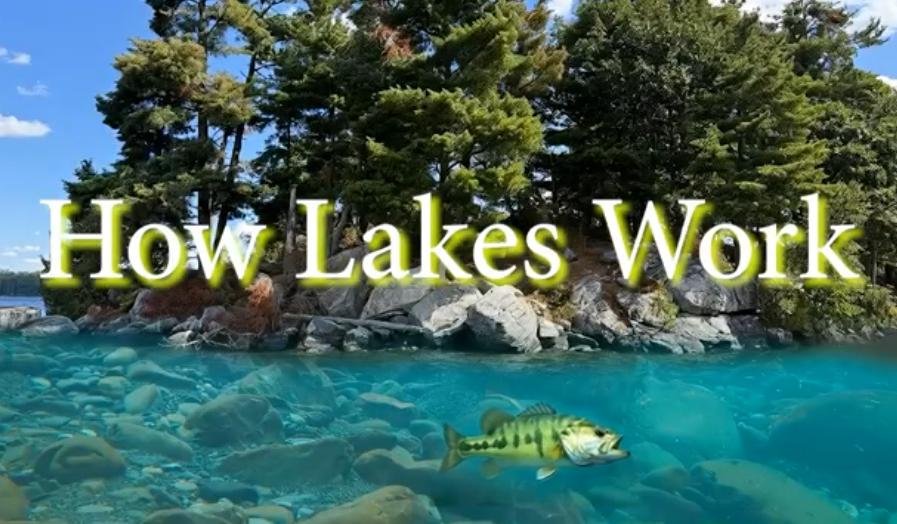
Muskoka Steamships & Discovery Centre (MSDC) and Friends of the Muskoka Watershed (FOTMW) present two more webinars about the health of our lakes.
Join them on January 27 and February 3 with two speakers each week. And it’s free!
- The next webinar on Tuesday, Jan. 27, begins with Gord Miller of Earthroots. He is a retired ecologist living in Muskoka, who has published scientific papers in the aquatic sciences and worked as a researcher, environmental field officer, teaching professor and environmental consultant. He is best known for his 15 years as the Environmental Commissioner of Ontario, where he oversaw government decision-making on matters related to the environment. Gord Miller presents The Littoral Zone – Lots of Action at the Lake’s Rim The presentation will introduce the audience to the concept of the littoral zone of lakes by focusing on four questions: What are the parts of the littoral zone? How does it function ecologically? How important is it to the whole lake ecosystem? And, how is human interaction with the littoral zone important? Participants will be exposed to a new lexicon of terms and concepts that will inform them of the dynamics of how lakes work.
- Up next, on Jan. 27 is Dr. Norman Yan, who has worked with the Ontario government, then York University and founded Friends of the Muskoka Watershed. For over half a century, he has worked to understand and, where possible, resolve the threats to the health of Ontario’s lakes. He has focused his research on the threats to animal plankton, the so-called “little living lawnmowers” in lakes. He was recognized with his induction as a fellow in the Royal Society of Canada in 2012. Dr Norman Yan presents For the Love of Daphnia: How Tiny Creatures Make Our Lakes Work. There are thousands of species that inhabit the offshore waters of Muskoka lakes. While almost all are invisibly small, they are vital to the health of our lakes. Dr Yan will introduce you to his favourite, the water flea Daphnia. Despite being only one mm long, she’s amazing. She swims the equivalent of a marathon every day. He will explain her food too. “It’s like eating the glass bowl to get at the salad.” She and her kin filter the equivalent volume of the whole lake free of algae every 1 to 2 weeks, keeping lake waters clear. Norman will share Daphnia’s story to help you understand the importance of protecting even the tiny creatures in our lakes.
- On Tuesday, Feb. 3 Dr. Andrew Paterson, a senior research scientist with the Ontario Ministry of the Environment, Conservation and Parks, and an adjunct professor at both Queen’s University and University of Waterloo, will lead a presentation. He leads a 50-year monitoring program of sentinel lakes in south-central Ontario and conducts collaborative research to understand how lakewater quality and ecology is impacted by multiple environmental stressors. His research is sharply focused on science that informs or improves environmental policy and lake management. Paterson presents When Lakes Fall Ill: A Review of Current Threats to Lake Health in Ontario. Across the globe, inland lakes are being altered by climate change, pollutants, landscape degradation, and the introduction of non-native species. Long-term monitoring and new research show us that lakes respond to these stressors in complex and surprising ways, with important implications for water quality and aquatic biota. However, these data also show us that lakes can respond positively and rapidly to restoration efforts, underscoring their remarkable resilience and the value of creating effective environmental legislation and policies. In a review of the latest science, this presentation will explore current threats to lake health in Ontario, and how these threats may interact to impact aquatic ecosystems. Where possible, it will also discuss the steps we can take to help protect these sensitive ecosystems for future generations.
- The second presentation on Feb. 3 is by Elder Christopher Stock (TEHONATÁHNHEN) who is a 5th generation member of the Wáhta Mohawks, whose ancestors relocated from Kanehsatà:ke – Oka, Quebec to Muskoka in 1881. He began his teaching career with the Wáhta Mohawk’s Kinderkids Program, a unique outdoor education program for JK/SK students. He is a graduate of Queen’s University’s Indigenous Teacher Education Program. His interactive Indigenous Cultural Experiences offer an introduction to North America’s Indigenous Peoples and their culture, creating a welcoming, inviting, engaging, positive experience, and an opportunity to build a bridge towards active and sustaining Truth and Reconciliation. Christopher Stock (TEHONATÁHNHEN presents “She is resting”: Winter and the important role of ice. The presentation focuses on Restoring Our Relationships – With Nature and the Natural World. Winter. The time of rest. Our mother Earth is covered with a warm blanket of snow, allowing her to sleep and rest up before Spring. All of the lakes are covered over with a thick layer of ice to cap off and allow the waters to still and settle and reset, and all of the life in the water continues, yet slowly. For some, they bury themselves into the mud and slumber, while others seek refuge in the deep waters and continue at a slower pace. The Earth goes through its natural rhythm and cycle to reset the balance and the natural order of things. The role of responsibility, stewardship and of a reciprocity relationship with all of Creation in order to foster balance and Harmony for all. Our way of existing on this planet is coexistence with the natural world, not to try to control the natural world. “The One Dish with One Spoon” Treaty is an agreement accepted by more than 50+ nations from the Arctic Circle to Mexico and East of the Great River – The Mississippi River, including Prince Edward Island, Newfoundland and Labrador. Indigenous peoples strive for peace, balance, unity, harmony, honour, respect, love, thanks and gratitude for all life. These are my thoughts and my thoughts alone, as I understand the teachings from the ancestors both Indigenous and non Indigenous. Nià:wen kowa Chi Miigwetch The How Lakes Work series is presented by The Muskoka Steamships & Discovery Centre and Friends of the Muskoka Watershed. Each presentation will be recorded for future viewing.
Sign up for the free webinars here: https://realmuskoka.com/webinars/
Preview below.
From Friends of the Muskoka Watershed
Don’t miss out on Doppler!Sign up here to receive our email digest with links to our most recent stories.
Local news in your inbox six times per week!
Click here to support local news

0 Comments