
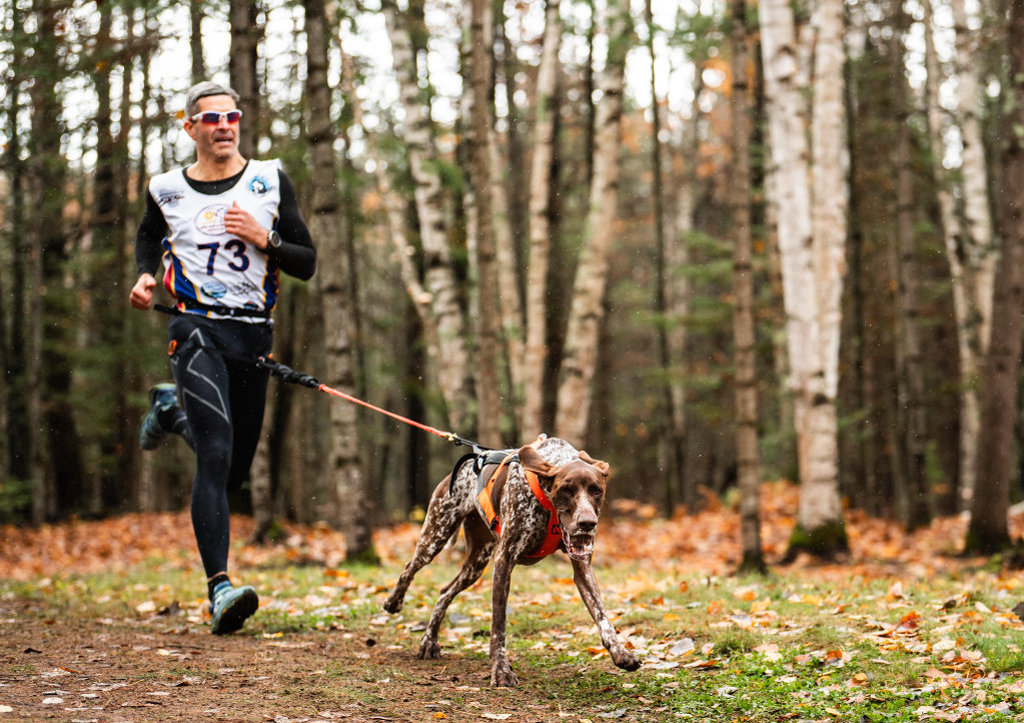
The incredible bond between humans and their furry best friends has been well documented over the generations.
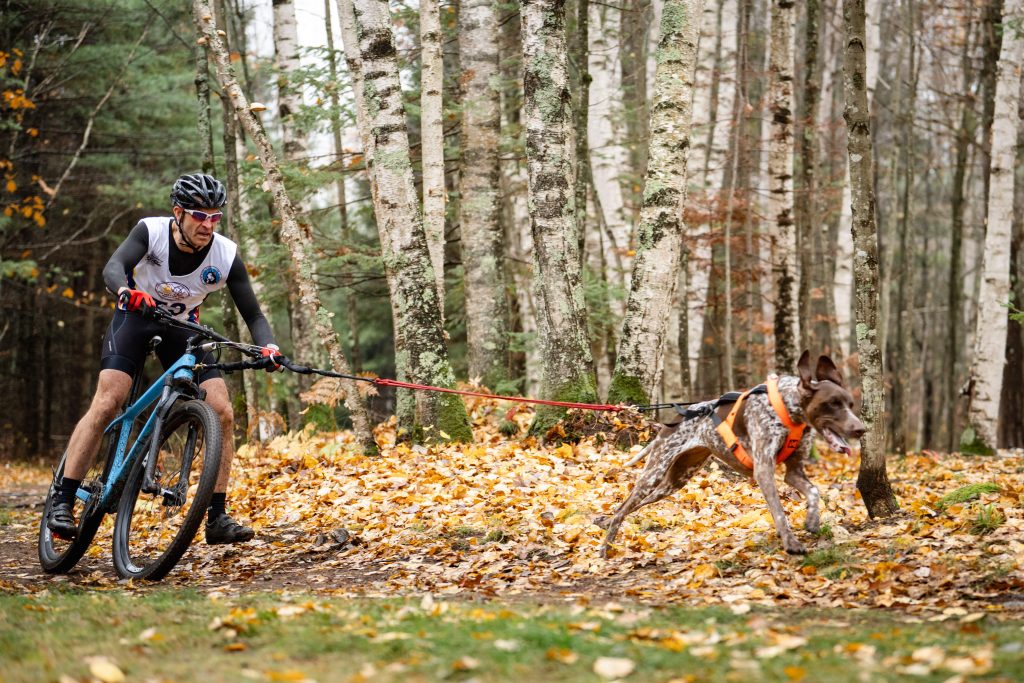
This connection is on full display during the many sled dog sports that feature both human and canine working together for a common goal. These include skijor and bikejor, where the dog is harnessed and pulling while the human is also working by either skiing or biking to keep pace.
There is also a dryland sport called canicross where a human and dog run together as a team, with the dog pulling the human using a hands-free harness and line.
In October, Huntsville’s Lowell Greib, who helped start and grow skijoring in Muskoka, won silver in one event and finished fifth in another at the International Federation of Sled Dog Sports (IFSS) Dryland World Championships in Minocqua, Wisconsin.
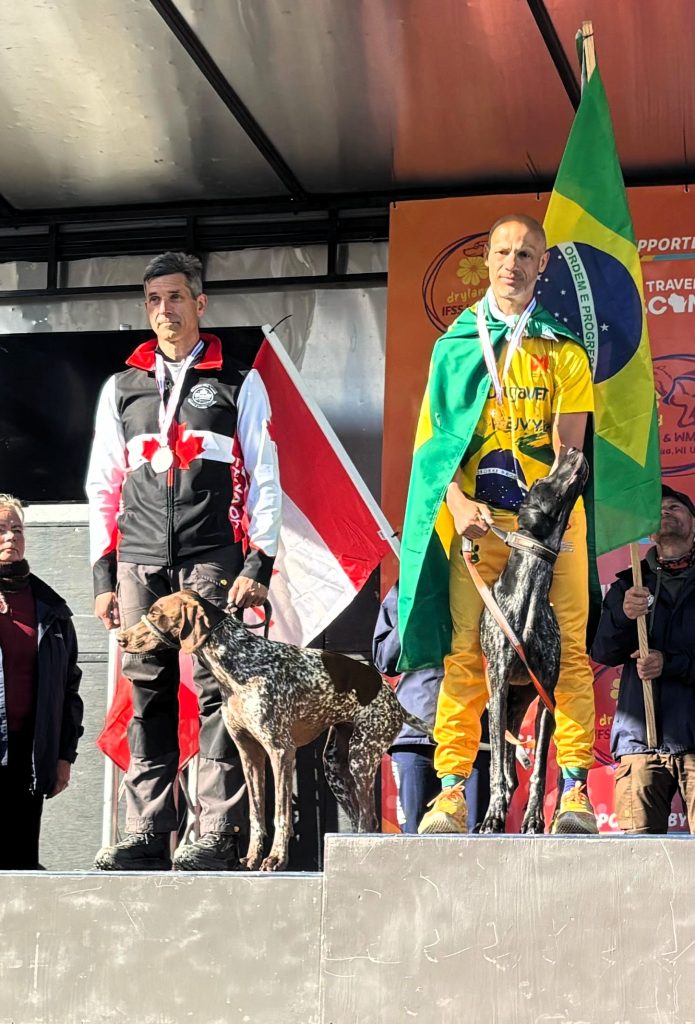
Greib finished second in the Dog Canicross – Men Masters 50-59 division, and fifth in the men masters 50-59 Dog Bikejor.
As Team Canada captain at the World Championships, Greib was especially proud of the camaraderie shown by the 64 members of the national team as well as the overall community of sleddog competitors from around the globe.
Canada won the most gold medals at the event, coming second in overall medal count to the United States.
“In the event I won my silver, William Oliviera, who won gold is from Brazil and actually has the sister of my dog, so it was two sisters on the podium, which was kind of cool,” says Greib, who was with his dog Tuli.
Having been in harness dog sports for nearly two decades, Greib was happy with the results, but even happier at the growth of the sport over the years.
“What I like best about the sport is that it allows for this kind of owner dog or handler dog bond,” says Greib. “Training with the dog, the dog learning, working as a unit, you know, and figuring out the intricacies of how you actually are going to function as a team.”
There is the speed factor, too. When attached to a dog, there is an extra 30 per cent added to running and biking – making the human really push themselves.
“You can imagine running as quickly as you can for five or six K, but then adding that extra speed,” says Greib. “Bike speeds can be mid-30s, up to 40k an hour. It’s mountain biking style, so it is over rougher terrain and, you know, ripping through the forest at high speeds.”
Greib first started in harness dog sports with a rescue dog from Northern Ontario to help the canine blow off steam, while also getting in a solid workout himself.
“I had a chance at cross skijoring, which is skiing behind a dog, cross-country skiing, and kind of embraced that, which was great for me,” he recalls. “Then we introduced that to another dog that we had as a duck tolling retriever, not really a racing dog, and just did it for pleasure.”
The love for the sport stuck and eventually Greib started searching for a dog bred for harness sports and found Tuli. The idea was to be more competitive, and it worked.
“It turned out we were pretty good at it so there we made our qualification standards, and were accepted onto the national team,” he says. “When the dog’s performing, I feel obliged to put that extra gear in, because if she’s doing her work, I better do my job.”
While the World Championships is a competitive environment, it is also very supportive. Greib explains how he’s made friends from around the world through harness dog sports.
Himself, and many others, welcome newcomers and help them with tips and even hosting group sessions.
“We used to host ski touring days at Arrowhead Park,” says Greib. “Lots of people had come through and how do you fit your dog in harness? What are some basic commands? When a dog is not used to being in harness, you put a harness on them, some dogs can just buck around like a wild horse and not pull at all, but you got to get them used to harness . . . to feeling load.”
Putting the harness on in safe and friendly environments, like at home, is a good way to start. It allows the dog to adjust to the unfamiliar feeling slowly and confidently.
“I’m just in the process of starting a new social media kind of platform that’s dedicated just for this, it’s just to help newcomers understand what to do and get tips,” says Greib.
It’s another way that veteran sled dog sports competitors like Greib can give back and keep their sport growing year after year.

0 Comments