
Hugh Mackenzie is on break this week.
By Hugh Holland
As a Canadian who worked four decades as an engineer and manufacturing executive in the global auto industry — visiting many global companies and watching the U.S. and Canadian economies, industries, and communities intertwine — I’ve never seen the Canada–U.S. relationship under more strain. Counterproductive tariffs are back. Auto jobs threaten to leave Canada. And the climate clock is ticking louder than ever. Yet amid the noise and nationalism, there is still a better path — one rooted in shared prosperity, clean energy, and a livable environment.
We need to review a bit of history to understand what’s at stake. Henry Ford started building cars in the U.S. in 1903. Sam McLaughlin started building cars in Canada in 1907.
Since the auto trade agreement was signed in January 1965, Canada and the U.S. have built one of the most successful industrial partnerships in the world. Our auto sectors didn’t just trade — they co-produced. Parts of a car assembled in Ontario might cross the border several times before final assembly in Michigan, or vice versa.
That integration created jobs, lowered costs, and made both countries more competitive and prosperous. And I can tell you that in the company where I worked, Canadian plants were always fully competitive with US plants in quality, productivity, and cost.
But today, that legacy is under threat. Trump says he wants to bring auto jobs “home,” even though this global industry evolved on both sides of the border at the same time, and even if it means gutting Canadian plants and unraveling decades of cooperation. Under pressure from Trump, Stellantis recently announced it will shift production from Ontario to Illinois, despite substantial Canadian financial support, with a legal agreement. Financial support from states and provinces is quite common, given the number of jobs at stake. The next day, they said they have other plans for Brampton, but will Trump allow them to do it?
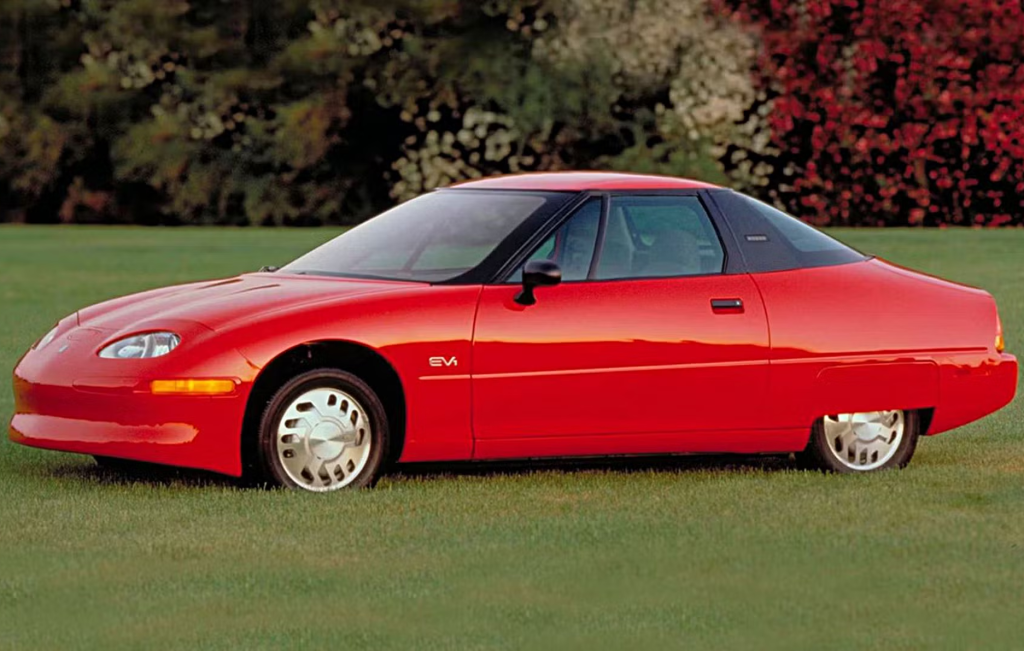
In 1996, General Motors developed EV1, the world’s first modern electric vehicle, to help solve a serious air pollution problem in LA. But, while U.S. auto companies spent 30 years and billions of dollars to engineer and tool up a line of climate-responsible products, the U.S. fossil fuel industry finished its multi-decade campaign in 2010 to eliminate election campaign contribution limits. So, Fossil fuel money then misled U.S. voters about energy and climate change, and elected Trump.
But the real danger isn’t just economic — they are strategic. Scientific and financial information from all credible sources tells us that Trump’s denial of reality is nothing short of reckless and unconscionable. Unless we act with urgency today, everyone under 25 years of age everywhere will face both severe climate change and severe energy shortages before they retire. These aren’t distant threats. They are already disrupting food systems, migration, infrastructure, and economic stability. Ironically, as the world’s biggest consumer of oil, the U.S. is particularly vulnerable.
And yet – while the rest of the world races ahead on electrification – the U.S. is falling behind. China is flooding global markets with affordable EVs. Europe — and much of the world — is scaling battery production and hydrogen as a carrier of zero-emission electricity. If the U.S. turns inward while others electrify, they will need Canada’s oil more than ever. But Canada will be forced to redirect our edge in critical minerals — including high-energy aluminum — to European and Asian markets, albeit with higher logistics costs.
There is a better path.
Imagine a North America that leads the world in clean transportation. Where Canadian minerals power American batteries. Where Ballard Power of Vancouver builds more hydrogen-powered freight locomotives for CPKC Rail to operate across the continent. Where John Deere, Caterpillar, Alstom (France), JCB (UK), Daimler, VW, BMW (Germany), Volvo (Sweden), Hyundai (Korea), Kubota, and Toyota (Japan) deliver zero-emission transportation, farm, and construction equipment. Where Canadian-built EVs roll off the line in exchange for specific products from the U.S., Europe, and Asia. Where our grids are smart, our air is clean, and our workers are building the future — not clinging to the past.
That’s the promise of realistic and forward-thinking governments. One that restores the spirit of cooperation and sees Canada not as a competitor, but as a partner. One that invests in shared infrastructure and harmonizes EV incentives. One that understands that economic prosperity and environmental sustainability are not opposites — they’re inseparable.
Our trust in the U.S. has been severely shaken. But there are many signs the American people also want that future. They’re tired of chaos, division, and zero-sum thinking. In the meantime, Canada must chart its own course to defend its interests and sovereignty.
We can’t wait for Washington to come around. We must accelerate our own electrification and EV adoption, deepen ties with Europe and Asia, and invest in the workers and technologies that will define the next century. But we must also keep the door open — and the light on — for a renewed partnership with our physically closest ally.
When the U.S. inevitably sees the light, Canada will be ready to move forward together.

Hugh Holland is a retired engineering and manufacturing executive now living in Huntsville, Ontario.

0 Comments