
Hugh Mackenzie is on break this week.
By Hugh Holland
Oil is essential to the national security (military operations) of both Russia (one of the world’s biggest oil producers) and the US (the world’s biggest oil consumer). Their ratios of reserves to production/consumption put them both at risk of losing economic and military strength.
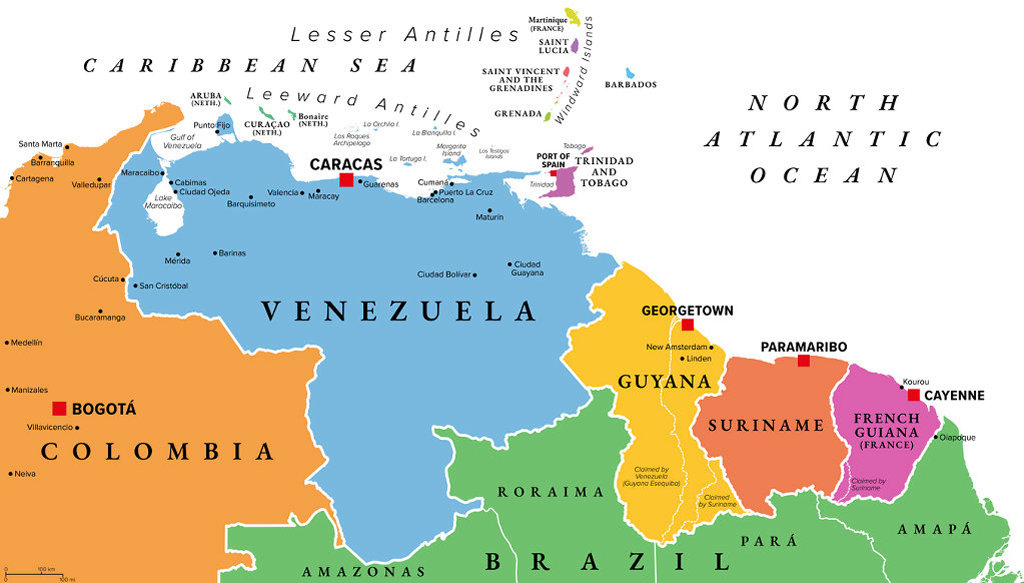
Venezuela, which once welcomed American energy companies, has the world’s largest oil reserves. Venezuela and its oil lie at the nexus of two of Trump’s stated national security priorities: dominance of energy resources and control of the Western Hemisphere. Venezuela has about 17 per cent of the world’s known oil reserves, or more than 300 billion barrels, nearly four times the amount in the United States. And no nation has a bigger foothold in Venezuela’s oil industry than China, the superpower whose immense trade presence in the Western Hemisphere the Trump Administration aims to curb.
Venezuela nationalized their oil industry in 1976. Trump “wants that oil for the United States.” During his first term, he backed attempts to oust Venezuelan President Maduro. After he left office, he lamented their failure. “When I left, Venezuela was ready to collapse,” he said in a 2023 speech. “We would have taken it over. We would have gotten all that oil.”
Trump wrote on social media that U.S. operations there would continue until the country returned to the United States “all of the Oil, Land, and other Assets that they previously stole from us.”
On December 18, 2025, Stephen Miller, the White House homeland security adviser, posted a political manifesto filled with misrepresentations. It was intended as a justification of all that had come before, from the boat strikes to the military buildup to the threat of a blockade.
“American sweat, ingenuity and toil created the oil industry in Venezuela,” he wrote. “Its tyrannical expropriation was the largest recorded theft of American wealth and property. These pillaged assets were then used to fund terrorism and flood our streets with killers, mercenaries and drugs.”
Historical Background
For decades, Venezuela’s oil industry was controlled by international companies (Exxon, Shell, Gulf). They extracted profits while Venezuela received limited royalties. Venezuela was a founding member of OPEC (1960). By the 1970s, OPEC countries were asserting control over oil production and pricing, inspiring Venezuela to follow suit. Rising nationalism and demands for economic independence pushed leaders to ensure oil wealth funded social development rather than foreign shareholders. President Carlos Andrés Pérez sought a moderate form of nationalization, compensating foreign firms while creating the state-owned Petróleos de Venezuela (PDVSA) in 1976.
Before becoming president of Venezuela in 2013, Nicolás Maduro worked as a bus driver in Caracas and later rose through the ranks of politics, serving as a union leader, legislator, and eventually foreign minister before replacing President Hugo Chavez. Maduro inherited the nationalized oil sector, but due to falling oil revenues, could not support the Chavez-era social spending. Trump has a higher approval rating than Maduro, but both are widely unpopular leaders.
In secret negotiations with the Trump administration, Maduro offered to open Venezuela’s oil industry to American companies. But that would have left Maduro in charge. The White House said no deal.
Trump’s 2nd campaign began on Sept. 2, 2025, with military strikes on small speedboats that the Trump administration claimed, without offering evidence, were trafficking drugs. Then the strikes continued, again and again. There have been 26 so far, killing 99 people across the Caribbean and the eastern Pacific Ocean, acts that legal experts say may amount to war crimes.
Then the campaign escalated. Trump authorized planning for covert C.I.A. action and deployed the largest naval force in the Caribbean since the Cuban Missile Crisis in 1962. The military positioned warships off Venezuela’s coast, sent bombers to fly just offshore, and dispatched troops and sensitive radar equipment to Trinidad and Tobago, an island nation just a few miles away.
These moves didn’t always make sense. Officials explained each development as an effort to stop the flow of drugs from Venezuela to the United States. They call the country a narco-state and its president, Nicolás Maduro, a cartel leader. But Venezuela is not a drug producer, and most narcotics smuggled through the country are headed for Europe, not the United States. U.S. officials say it’s about dislodging Maduro from power. Trump “wants to keep on blowing boats up until Maduro cries uncle,” the president’s chief of staff, Susie Wiles, told Vanity Fair.
In the last week, the United States has seized a Venezuelan oil tanker and promised to blockade “ALL SANCTIONED OIL TANKERS” going to and from the country. Officially, these boats are trading crude in violation of U.S. sanctions on Iran, as they’ve done for many years, especially since Russia invaded Ukraine in 2022.
On December 18, Venezuela said its military would escort oil tankers heading to Asia to stop the United States from seizing them.
The Future
Most natural resources including water are not evenly distributed between counties. If countries are allowed to seize control of any natural resource in any other country, essentially stealing it, there will never be peace in the world.
UN policy emphasizes that natural resources should be managed cooperatively and equitably, not seized or exploited by force. The United Nations sees resource-sharing as essential for peace, stability, and sustainable development.
Global oil reserves will be largely depleted over the next 50 years. To avoid the worst effects of climate change, oil must be replaced by renewable energy. Most countries are now capable of producing their own renewable energy, thus fulfilling the UN goals of sustainable energy and Peace.
With input from the NY Timeas and Microsoft Copilot AI

Hugh Holland is a retired engineering and manufacturing executive now living in Huntsville, Ontario.
Don’t miss out on Doppler!Sign up here to receive our email digest with links to our most recent stories.
Local news in your inbox six times per week!
Click here to support local news

0 Comments