
A couple of weeks ago, I wrote about a decision of Huntsville Council to erect a statue of Mahatma Gandhi, a decision that they have wisely subsequently reversed. We received many comments on that commentary, a number of which we did not post because they were either racist or disrespectful.
But other comments were quite thoughtful, and one theme I noted was a concern about how much Huntsville has changed. There is truth in that, no doubt, but those comments caused me to think about the wider picture, and it has become pretty clear to me, at least, that the whole damn world is changing, not just Huntsville, and not necessarily for the better.
Let’s start with Canada.
There is, in my view, more anger and less tolerance here now, especially since the COVID-19 Pandemic. Political differences are becoming barriers rather than an opportunity for discussion and respectful debate. We see it in our own communities, in the media, and in politics.
The result is an erosion of institutional traditions in Canada, which in turn can lead to the dilution of democratic principles. The rule of law sometimes appears to be optional, rather than mandatory. We tend to become more dogmatic about our personal views and less forgiving of the views of others. We also become more concerned and frightened about what lies ahead.
The inevitable consequence of this is that people in power seek more power and feed on the insecurity and divisiveness of the people they are supposed to serve. We see this more clearly in the United States, but make no mistake, Canada, in its present state, is vulnerable as well.
Andrew Coyne is a Canadian journalist who writes for the Globe and Mail. Recently, he has authored a book, “The Crisis of Canadian Politics.” At a recent Democracy Forum in Toronto, Coyne went right to the nub of the problem when he said, “It is debatable whether we really have a functional democracy in Canada.”
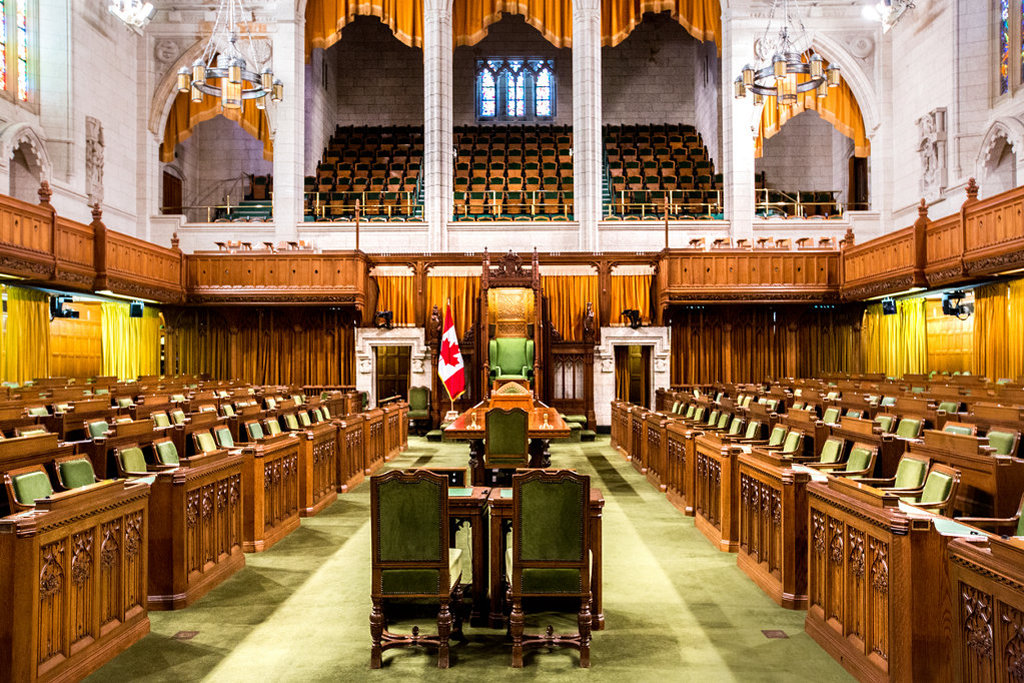
Coyne takes a longer view. He argues that over decades the balance of power in Canada has shifted dramatically. There is a centralization of power, and prime ministers now wield a lot more control, while cabinet ministers and elected members of Parliament have much less influence today.
Coyne notes that tools that once restrained governments, such as robust parliamentary debates, committee scrutiny, meaningful question-period oversight, or strong cabinet accountability, have atrophied under practices like omnibus legislation, tight party discipline, and limited sitting days.
He also warns that many Canadians take democracy for granted, assuming democracy is fine, even as institutional disfunction grows.
These problems—concentrated executive power, eroded checks and balances, a disengaged electorate—while creeping into the fabric of Canadian society over a number of years, become toxic when added to the current challenges facing Canada today.
Political practices that have been tolerated for years now add to an erosion of democracy. For example, for decades, candidates for political office, both provincially and federally, have been normally nominated by their political party in the constituency they seek to serve. Now there is a growing propensity for party leaders to appoint their candidates, removing that right from ordinary Canadians, a democratic right that allows the electorate to decide for themselves who will represent them.
As pointed out by Andrew Coyne, members of parliament are generally rubber stamps for their political party, with very little opportunity to make a real difference themselves. They are literally “whipped” into toeing the party line. In Parry Sound Muskoka, we will probably never know what our Member of Parliament truly thinks of his Party Leader, Pierre Poilievre, because the current system forces him to either be a bootlicker or on the outside looking in.
We see disturbing signs of the centralization of power in Ontario as well. The Ford Government has, in the past year, introduced the Strong Mayors Act. This is legislation that gives most municipal mayors a veto in certain circumstances and sole responsibility for developing budgets. In my view, this seriously reduces the role and effectiveness of elected councillors chosen by their constituents to represent them in all matters. It can also lead to an abuse of power by a single member of a municipal council.
The Ford Government is also sending messages that boards of education in Ontario may be abolished. In this instance, where a number of boards are dysfunctional, that, or at least major reforms, may be necessary. Still, however, under the challenges to democracy that exist today, this would be one more example of centralized control, denying ordinary citizens a say.
I tend to agree with Andrew Coyne that democracy in Canada is now under threat. It may be more subtle than what we see in the United States, but nevertheless, it is there.
In fact, democracies are being threatened worldwide, with illegal wars in the Caribbean, significant election interference, threats to Canadian and European sovereignty, a weakening of NATO, political control of the judicial system, and a general acquiescence to territorial bullying and my-way-or-the-highway politics.
Certainly, the erosion of democracy in Canada is not unique, but it is, I believe, in this day and age, a clear and present danger which we must guard against.
At a recent event in Toronto, I heard one participant muse, Is Canada in a mess, or are we on the brink of opportunity?
I would certainly hope it is the latter. In fact, I strongly believe it can be.
But we have a lot of work to do.
Hugh Mackenzie.
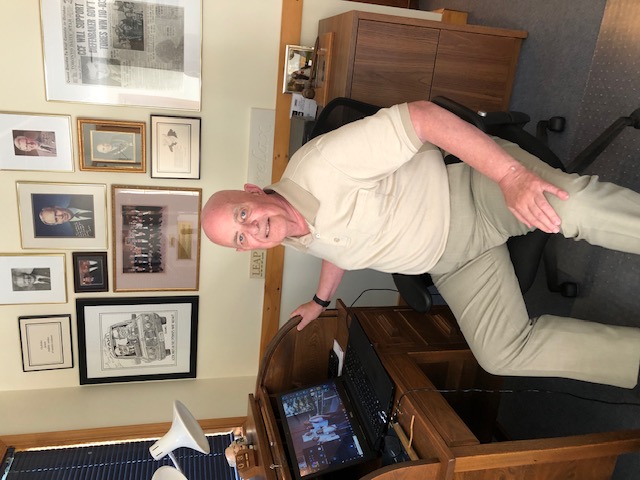
Hugh Mackenzie has held elected office as a trustee on the Muskoka Board of Education, a Huntsville councillor, a District councillor, and mayor of Huntsville. He has also served as chairman of the District of Muskoka and as chief of staff to former premier of Ontario, Frank Miller.
Hugh has also served on a number of provincial, federal and local boards, including chair of the Ontario Health Disciplines Board, vice-chair of the Ontario Family Health Network, vice-chair of the Ontario Election Finance Commission, and board member of Roy Thomson Hall, the National Theatre School of Canada, and the Anglican Church of Canada. Locally, he has served as president of the Huntsville Rotary Club, chair of Huntsville District Memorial Hospital, chair of the Huntsville Hospital Foundation, president of Huntsville Festival of the Arts, and board member of Community Living Huntsville.
In business, Hugh Mackenzie has a background in radio and newspaper publishing. He was also a founding partner and CEO of Enterprise Canada, a national public affairs and strategic communications firm established in 1986.
Currently, Hugh is president of C3 Digital Media Inc., the parent company of Doppler Online, and he enjoys writing commentary for Huntsville Doppler.
Don’t miss out on Doppler!Sign up here to receive our email digest with links to our most recent stories.
Local news in your inbox six times per week!
Click here to support local news

Well said. We no longer have a democracy in Canada. Our systems do not work well, there are not enough checks and balances to hold our government accountable and we have unethical leaders who abuse those weaknesses to further their own agendas. The MPs we elect to represent us, the people, stop representing us as soon as they get to Ottawa (or Queen’s Park). And, as we’ve seen recently, even those that are democratically elected can simply cross the floor and ignore the will of the people. That unethical and unprincipled action is endorsed by the PM. So yes, democracy in Canada is dead. There are so many weaknesses in our parliamentary system that there is no quick fix. The politicians lack the political will to do what is necessary to right the ship, and most people are apathetic about the whole situation. We are doomed.