
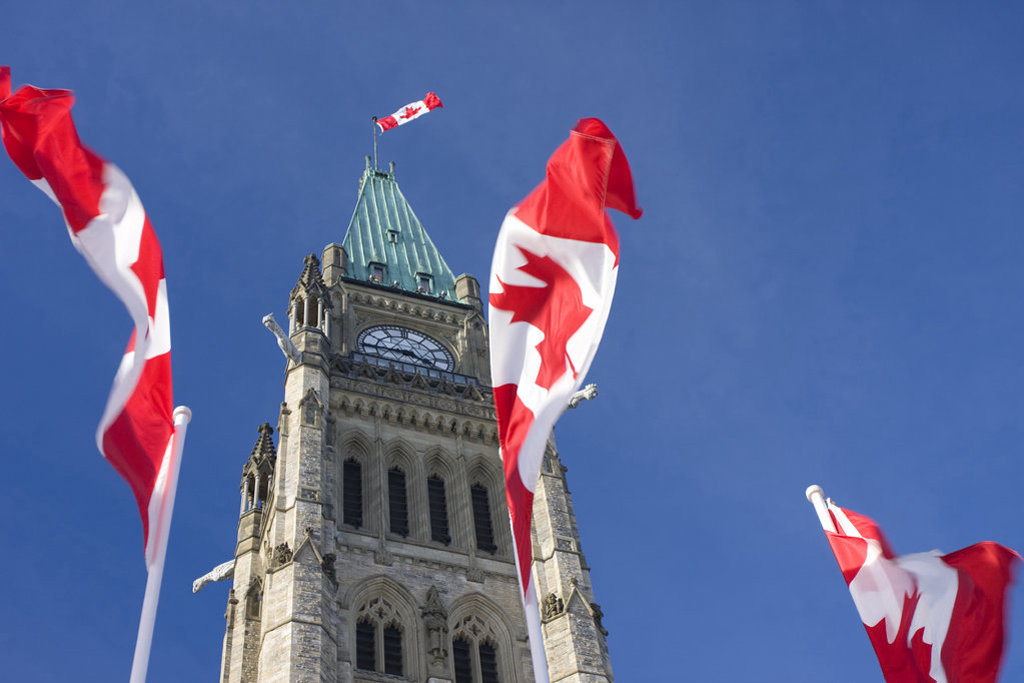
In spite of threats from U.S. President Donald Trump of a 50 per cent tariff on aluminum and steel, overall, this past week was a good one for Canada.
Whatever else some folks may think of Mark Carney, few can argue that inviting King Charles III to visit Canada and to have him deliver the Speech from the Throne at the opening of Parliament was a brilliant move at a time when Canadian sovereignty has been challenged.
In less than 24 hours on Canadian soil, although constitutionally unable to involve the Crown in politics, King Charles made it crystal clear where he stands when it comes to Canada’s uniqueness and independence. It also served to send a direct message to Donald Trump.
Many aspects of the King’s speech, some that were written by him and approved by the Prime Minister, emphasized the strength and the uniqueness of Canada and its distinct national character.
At one point, King Charles said, “Canada has embraced its British, French, and Indigenous roots and become a bold, ambitious, innovative country that is bilingual, truly multi-cultural and committed to reconciliation.” He referred to Canada as “a vast and great nation.”
He also said that Canada is recognized “throughout the world for bravery and sacrifice in defense of national values and for the diversity and kindness of Canadians.”
And then, in case there was any doubt, he ended the personal part of his speech highlighting for Canadians, as well as for the current movers and shakers in the United States, that, “As the anthem reminds us: The True North is indeed strong and free.”
So why is this so important, when some Canadians do not believe that Canada should be a monarchy?
For one thing, the King’s speech clearly enumerated the distinct differences between Canada and the United States without once mentioning the Trump Administration.
Canada is a parliamentary democracy with a constitutional monarchy. The United States is a federal republic with a presidential system, where the president serves as both the head of state and the head of the government.
Events in the past year or so have shown that the governance process in the United States has, perhaps unintentionally, left the door open for despotic rule where a single individual can call the shots, ignore the courts, undermine the rule of law, and pretty well do what they want, with little checks or balance. Our system of governance does not allow that.
Our electoral system is also very different. We don’t have political action committees that can pour millions of dollars, without meaningful restrictions, into election campaigns, not only to influence the outcome but also to gain access to the halls of power to promote their self-interests. Also, we don’t Primary our candidates for political office, which in the United States allows special interest groups with the financial ability to influence which candidate they want to run in an election.
As an example, Elon Musk is reported to have told Republican members in Congress that if they do not toe the line in supporting whatever President Trump wants, he will throw a million dollars into a primary race to defeat them. If true, how is that for intimidation?
Hopefully, now, more Canadians will see that our form of governance is vastly different from that of the United States and is a strong deterrent to melding our distinct culture with that of our neighbour to the south. Indeed, since the King’s speech in Canada, early polling has shown that support for both him and the monarchy has increased.
There was, of course, a snub of the monarchy and a boycott of the throne speech by the Bloc Quebecois. They are avowed separatists, and I have never been able to understand how they have been allowed to sit in a parliament that is there only for the betterment of Canada.
The King’s speech, at least to me, also emphasized the importance of Canadian unity. It will be more difficult to survive the tariffs and threats to our sovereignty from the Trump Administration in the United States, if we don’t have our own act together.
This week Prime Minister Mark Carney will meet with Canadian premiers in Saskatchewan, assuming the wildfires in that province and in Manitoba do not prevent that from taking place.
It is the perfect forum to foster nation-building and to forge Canadian unity on key issues that define Canada as a distinct and vibrant society. We need agreement and action on essential issues such as infrastructure in the national interest, eliminating inter-provincial trade barriers, and finding a way for oil and gas-producing provinces to get their products to market.
If meaningful action-planned initiatives for making Canada stronger and less reliant on the United States emerge from these meetings, it will be an important step for Canada to meet any challenges it faces from the Trump Administration.
Mark Carney, in spite of his ambitious agenda, cannot do this alone. Thankfully, there are signs that the provincial premiers are stepping up to the plate.
For some, it will be difficult to accept that in terms of the relationship between Canada and the United States, Ontario Premier Doug Ford, according to recent polling, is the most popular premier in Canada. His role in these discussions and his willingness to find solutions across party lines is important. It will also be a surprise to others that Quebec Premier Francois Legault has softened his position on a pipeline across his province and is willing to talk about it.
So, there are signs of hope. Prime Minister Carney has promised to fast-track all that is necessary to protect Canada’s sovereignty, economy, and security against external threats. It is a tall order. The First Minister’s conference in Saskatchewan this week will be an initial test of his ability to do that.
The second will be the G7 Summit, to be held in Alberta later this month. As an international event, Donald Trump will do his best to dominate it. Prime Minister Carney is the host. It will be illuminating to see how he stick-handles this as global eyes will be on this gathering.
There is a case to be made that in spite of all the angst and uncertainty, the concern for our children’s future and threats we endure from the Trump Administration in the United States, there is real potential for Canadians to come out of this mess ahead.
It will take guts; it will take determination and innovation. It will also take strong and united leadership. Canadians are up for all of that.
We are, as the King has reminded us, The True North Strong and Free.
Let’s prove it.
Hugh Mackenzie
(With some excerpts from the Toronto Star)

Hugh Mackenzie has held elected office as a trustee on the Muskoka Board of Education, a Huntsville councillor, a District councillor, and mayor of Huntsville. He has also served as chairman of the District of Muskoka and as chief of staff to former premier of Ontario, Frank Miller.
Hugh has also served on a number of provincial, federal and local boards, including chair of the Ontario Health Disciplines Board, vice-chair of the Ontario Family Health Network, vice-chair of the Ontario Election Finance Commission, and board member of Roy Thomson Hall, the National Theatre School of Canada, and the Anglican Church of Canada. Locally, he has served as president of the Huntsville Rotary Club, chair of Huntsville District Memorial Hospital, chair of the Huntsville Hospital Foundation, president of Huntsville Festival of the Arts, and board member of Community Living Huntsville.
In business, Hugh Mackenzie has a background in radio and newspaper publishing. He was also a founding partner and CEO of Enterprise Canada, a national public affairs and strategic communications firm established in 1986.
Currently, Hugh is president of C3 Digital Media Inc., the parent company of Doppler Online, and he enjoys writing commentary for Huntsville Doppler.
Don’t miss out on Doppler!Sign up here to receive our email digest with links to our most recent stories.
Local news in your inbox six times per week!
Click here to support local news

Loved this explanation of the differences in our form of governance vs the US one., Hughie. I have been trying to explain it for months, if not years, now. I am going to share this with my few chosen FB friends and relatives in Canada (Muskoka mainly),, US, UK, Europe, and here in Jamaica.