
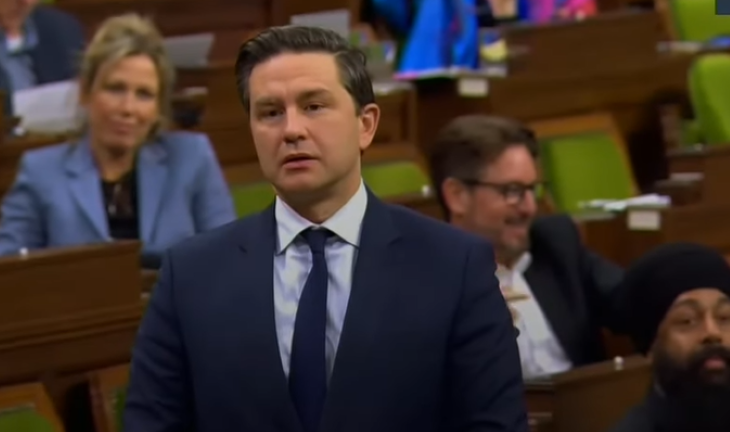
It was another interesting and back-biting week in Canadian politics, with plenty of signs that we can look forward to more. Having watched much of it, I feel comfortable making two predictions.
First, there will not be an early national election. The Liberals will win every non-confidence vote in Parliament related to the Carney Budget. Second, if Pierre Poilievre wants to hang on to the leadership of the Conservative Party of Canada, he has a lot of work to do, especially with disaffected Tories who decamped to Mark Carney. I say this in spite of one poll a few days ago, which may give Poilievre some wiggle room and some hope.
The Carney Budget was not a slam dunk for the Liberal Party. Frankly, it was not all that clear to follow; long-term thinking related to rebuilding a strong economy and short-term thinking as it relates to massive new spending. There was no clear path to an endgame. Nor was there room for any instant gratification in terms of what the government offered in the immediate future.
But the budget will pass, and the government will have its game plan for moving forward. That is more likely now that two members have left the Conservative Caucus, one of whom has crossed the floor to the Liberals and the other who has openly challenged Poilievre’s leadership. That leaves the Liberal Government one or two seats short of a majority, with rumblings that there may be more to come.
I have to say that I have little respect for people who cross the floor in any political party. They effectively have a contract with their constituents to support the party for which they are elected. People vote for them on that basis, offer financial support for that reason, and expect them to represent those interests, but the member (who, in this instance, is at least Chris d’Entremont) thinks he knows better than the people who elected him. One seldom changes political parties unless it is self-serving, with something in it for them. We shall wait and see.
Even if there was no support from disaffected Tories, the Liberals would still get their budget passed. No one in the House of Commons wants an immediate election in spite of their antics, with the possible exception of disgruntled Conservatives who may think it would be the death knell for Pierre Poilievre.
If there were to be an election now, the Liberals would win a majority. Certainly, both parties are relatively tied in current public support, but their leaders are not. Mark Carney is 20 points ahead of Pierre Poilievre when it comes to who people want to be prime minister. Like it or not, that makes a difference.
As well, the New Democrats cannot face an election without catastrophic consequences. If push comes to shove, they will find a way to duck a no-confidence vote.
Last week was certainly a bad one for Pierre Poilievre. If there was any doubt that there is turmoil and unhappiness within the Conservative caucus, that doubt should now vanish. It should not be surprising however, because this Tory Party is an amalgam of right-wing Conservatives and Progressive Conservatives as a result of a formal merger in 2003. The two have never completely melded.
Stephen Harper knew how to manage that. Erin O’Toole knew how to do that as well in the short opportunity he was given. Andrew Scheer had no empathy for Progressive Conservatives, and Pierre Poilievre chased far too many of them away, straight into the waiting hands of Mark Carney. His caucus is well aware of that. Some find joy in it, others do not.
With that background, Pierre Poilievre is on shaky ground. For one thing, the caucus alone, without party consultation or agreement, can force a leadership race. They did that to Erin O’Toole, and although unlikely, they could do it again to Pierre Poilievre.
Conservative leaders like Brian Mulroney and, yes, Stephen Harper, managed their respective caucuses as colleagues and with inclusiveness, not always with agreement, but with a genuine thirst for unity. With Poilievre, many feel that he and his advisors manage by fiat and a lack of meaningful consultation. There should be no belief that this Conservative Caucus is united. There is trouble brewing.
My sense is, however, that unless he sees the writing on the wall and resigns before he is told to, Pierre Poilievre will survive at least until the leadership review in January. But will he survive that?
If one were to have read an article in the Toronto Star last week one might think he will. A new Abacus poll out recently, and conducted before the defection to the Liberals of one Tory MP and the surprise resignation of another, Poilievre tested better than any other potential (Conservative) leader, including Premier Doug Ford.
We must remember however that prior to Justin Trudeau being shown the door, the Conservatives had more than 20 points on the Liberals. It is far too early to take the Abacus Poll as gospel.
Anything can happen in politics as we all know, and by January, it could be a whole new ball game. Poilievre may find a way to narrow the gap between his popularity and Carney’s. Mark Carney could fail miserably and have nowhere to go, leaving Poilievre as a likely standard-bearer. It is all possible, but in real terms, not likely.
Formal leadership reviews can be fickle and unpredictable. This one will be a full membership vote for all members of the Party who have been members for (likely) at least 21days.
It will also be a secret ballot. There will be debate in every riding in the country prior to the vote. Some ridings may try to direct voters, and some voters will be influenced by their MP, if they have one.
There is another dynamic with leadership reviews. What happens in public will not necessarily happen in private. Too many politicians will have their own agendas or ambitions. They will show their support and loyalty to Pierre Poilievre in public, but when it comes to a secret ballot, they may vote for change.
For example, both Melissa Lantsnam, who is the MPP for Thornhill, and our own MP Scott Aitchison are pretty likely to want to be prime minister, and first they must become leader of the Conservative Party of Canada. Certainly, Scott Aitchison has made no secret of it, as he ran for leadership last time around.
Publicly, as probably they have to, they will remain lapdogs to Pierre Poilievre. They will pledge to support him, they will stand by him, but in a secret ballot, they will not vote for him if they retain any ambitions for leadership. At least for Scott Aitchison, that will not be the first time.
I believe that with so many other ambitions, political realities, and consequences in play, Pierre Poilievre is not guaranteed to win enough votes in a leadership review to hang on to his current position. Whether that is him, or whether it is someone else in a subsequent leadership race, it needs to be an individual, in my view, who can lure back to the Conservative Party fold the millions of progressive conservatives that Pierre Poilievre has chased away.
Without that, I believe it will be a chilly day in Hell before conservatives form another federal government in Canada.
Hugh Mackenzie.
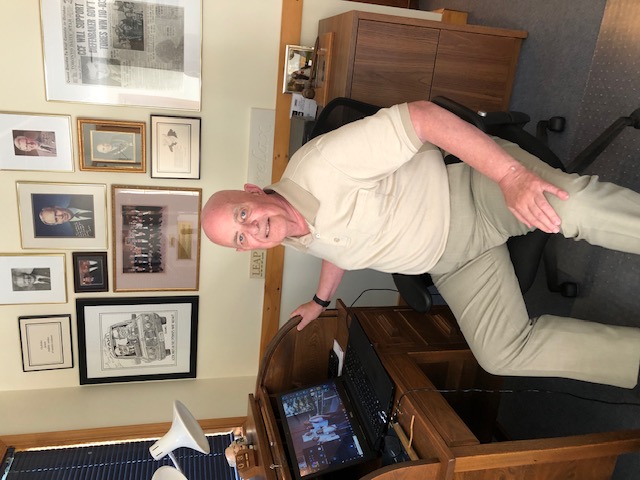
Hugh Mackenzie has held elected office as a trustee on the Muskoka Board of Education, a Huntsville councillor, a District councillor, and mayor of Huntsville. He has also served as chairman of the District of Muskoka and as chief of staff to former premier of Ontario, Frank Miller.
Hugh has also served on a number of provincial, federal and local boards, including chair of the Ontario Health Disciplines Board, vice-chair of the Ontario Family Health Network, vice-chair of the Ontario Election Finance Commission, and board member of Roy Thomson Hall, the National Theatre School of Canada, and the Anglican Church of Canada. Locally, he has served as president of the Huntsville Rotary Club, chair of Huntsville District Memorial Hospital, chair of the Huntsville Hospital Foundation, president of Huntsville Festival of the Arts, and board member of Community Living Huntsville.
In business, Hugh Mackenzie has a background in radio and newspaper publishing. He was also a founding partner and CEO of Enterprise Canada, a national public affairs and strategic communications firm established in 1986.
Currently, Hugh is president of C3 Digital Media Inc., the parent company of Doppler Online, and he enjoys writing commentary for Huntsville Doppler.
Don’t miss out on Doppler!Sign up here to receive our email digest with links to our most recent stories.
Local news in your inbox six times per week!
Click here to support local news

When Trudeau stepped down, we couldn’t have an election while there was a Liberal leadership race. This was a strategic move to stem the Conservative momentum, and give lots of exposure to Carney. It worked for them. Can the Conservatives do the same? I’m not sure if the same rules apply if the leadership election is not the governing party. If they do, Poilievre should resign before Carney calls an election. It may have the same effect – stem the Carney momentum and give a new Conservative leader more exposure.