
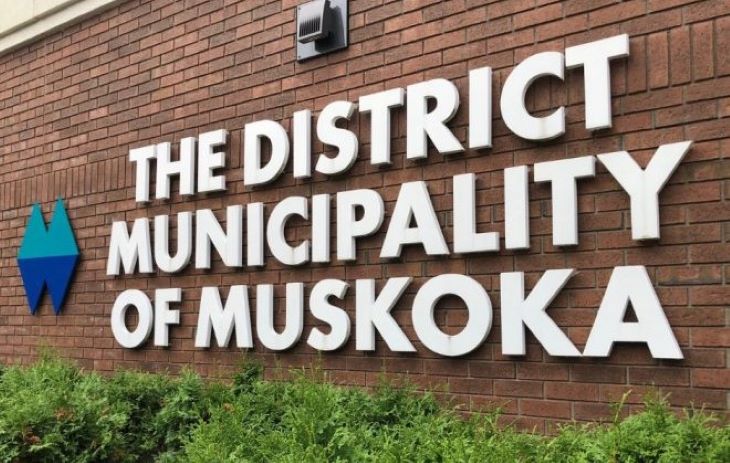
Today, the Ontario government introduced the Better Regional Governance Act, 2026, which, if passed, would make several changes, including the appointment of the District of Muskoka Chair.
Currently, the Muskoka District Chair is elected by District councillors. Instead, the proposed legislation would see the chair appointed by the province.
“These changes would support lower costs for municipal taxpayers and better alignment between regional decision-making and shared provincial-regional priorities. The proposed changes include giving the Minister of Municipal Affairs and Housing the power to appoint upper-tier council chairs in eight fast-growing regions and granting these council chairs “strong chair” powers to help them deliver on government priorities, such as housing and infrastructure,” states the release.
The proposed legislation would also see Simcoe County Council reduced from 32 members to 17. Niagara Regional Council would also be reduced from 32 members to 13 members.
“We will always support our municipal partners, both lower- and upper-tier, in delivering locally led solutions that offer better value for taxpayers and speed up decision-making,” said Rob Flack, Minister of Municipal Affairs and Housing. “These changes provide the necessary tools for local leadership to advance our shared priorities and better serve our communities, including by expediting housing and infrastructure development.”
According to the province, the proposed Better Regional Governance Act, 2026, and related regulatory changes would, among other things:
- Allow the Minister to appoint regional chairs in Durham, Halton, Muskoka, Niagara, Peel, Waterloo and York, as well as the warden of Simcoe County. Under previous legislation, the Minister had the authority to appoint chairs in Niagara, Peel and York regions for the 2022-2026 council term only.
- Regional chairs in the eight municipalities listed above would receive “strong chair” powers which mirror “strong mayor” powers, providing more efficient, streamlined local decision-making, enabling them to deliver faster results for residents and support efforts to advance shared provincial-municipal priorities.
The release also states that all regions must review their council composition following the 2026 municipal election, except Niagara Falls.
“The government will continue working with municipalities to identify ways to strengthen local governance in Niagara, Simcoe and beyond. Working together to advance shared provincial-municipal priorities helps advance housing and economic development, preparing both individual municipalities and the province as a whole for growth,” states the release.
“Our government is taking action to ensure regional governments, including the District of Muskoka, have the tools they need to respond to growth, deliver services efficiently, and support housing and infrastructure in our communities,” said Parry Sound-Muskoka Member of Provincial Parliament Graydon Smith. “These changes are about strengthening how decisions are made, so they can happen more efficiently, with clear accountability and in a way that delivers better value for taxpayers.”
Smith added that local municipalities and elected leaders will continue to play a central role in decision-making, “and we will keep working closely with our municipal partners to ensure these changes reflect the needs of our communities. Muskoka is a unique and special place and protecting its character while planning for the future will always be a priority. And at the end of the day, this is about making sure our region has a governance structure that can deliver results for residents, today and into the future.”
The next municipal election will be held on Monday, October 26, 2026.
Don’t miss out on Doppler!Sign up here to receive our email digest with links to our most recent stories.
Local news in your inbox six times per week!
Click here to support local news

The District is a horrible fiscal manager and full of red tape that no one, including the past and present Chairs have an interest to address it. Perhaps this change will help get costs under control and cut the plump bureaucracy. Something has to change. Perhaps this is the answer. The other option is to eliminate the District entirely.
“Ford’s Ontario Democracy”
Wow! District Chairs c/w super powers appointed by the Province; might as well include appointment of Mayors. Ford wants to control everything.
No local politics required!
I must have missed that in his election platform.
Being the cynic that I am, it sounds more like a power grab by the Province to make it easier for them to implement their agenda. Despite the positive spin they put on it, we will lose some control over our own decision making. It can be seen in Toronto as well where Toronto City Council planners are simply overridden by Provincial bodies like the OMB. As a result, the developers are dictating the city planning, not the people of Toronto. And it’s a mess.
This is not about “efficiency” or “accountability.” It’s about centralizing power and weakening local democracy.
1. You don’t improve accountability by removing elections. An appointed chair answers upward to the province not outward to residents or the municipalities footing the bill. If the chair fails, voters can’t remove them. That is the definition of reduced accountability.
2. “Efficiency” is a convenient excuse for bypassing dissent.Regional councils are deliberately made up of mayors and councillors because they force consensus across communities. That can be slowerbut it ensures decisions reflect local priorities, not provincial timelines or political pressure.
3. There is no evidence the elected model in Muskoka has failed, broken down, or blocked housing or infrastructure. Fixing a problem that hasn’t been proven to exist is policy theatre.
4. An appointed chair weakens municipal voices., Saying municipalities will “continue to play a central role” while stripping them of the power to choose their own leader is contradictory. Influence without authority is symbolic, not real.
5. Muskoka’s “unique character” is better protected by local accountability, not provincial appointment.l A chair chosen by Queen’s Park is more exposed to province-wide growth targets and political priorities than to Muskoka residents. Local election forces balance; appointment does not.
6. If the model works here, it sets a precedent everywhere. This isn’t just about Muskoka. It’s about establishing that when a region becomes inconvenient, the province can override local governance rather than work through it.
If the province truly believes in better governance, it should make the electoral system work better, not replace it with a top-down appointment justified by vague promises and no hard evidence.
As for statements from Graydon Smith—“clear accountability” without election of the District Chair is not accountability. It’s control, rebranded.
This is a fight for the Muskoka we know and love. It’s under attack. Don’t let Queen’s Park run us over so they can deliver our community and our tax money to their friends. Tell Doug Ford and Graydon Smith to lay off our Muskoka
The District Chair is already appointed. The current chair is barley a resident- he changed his address to his parent’s cottage a day prior to the nomination period ended. Now a the Chair will simply be appointed by different politicians.
The District financinal management is shameful with no improvement in sight. Perhaps this change will help bring costs under control and cut the bloated bureaucracy.
The next step is to reduce the number of District councillors, eliminate wasteful programs and transfer more responsibility to the lower tier municipalities.
The people of Muskoka must fight this. This is a Queens Park Doug Ford power grab so he can look after his friends. Taxes are high enough. Special interests already wield too much power. We should be directly electing the District Chair and that individual should not have dictator like powers.
Ford and his local cronies will appoint our District Chair who will have supreme powers. We know what happens next with this anti democratic move. More pandering to special interests, rampant development, destruction of the Muskoka environment and higher spending and taxes. Inside deals. Ford is treating us like serfs in a feudal society. Any guesses on who will be the Lord of the Manor?
Our district is bloated and in some cases a duplication of municipal government but it is elected democratically. I don’t like the way our district chair is elected, but the position is not appointed. What we do need is a reduction of the number of district councilors and a district chair that is a permanent resident elected by the full voting population of Muskoka. Do we live in a dictatorship or a democracy?
Interesting how Mr. Lehman was able to qualify for nomination as District Chair.
https://southmuskoka.doppleronline.ca/listen-up-our-new-district-chair-commentary/