
BY KATE DICKSON
Late April and May are typically a time of resurgence in The Land Between, as both year-round and seasonal residents prepare their properties for warmer months spent on the water, the dock, and the trails.
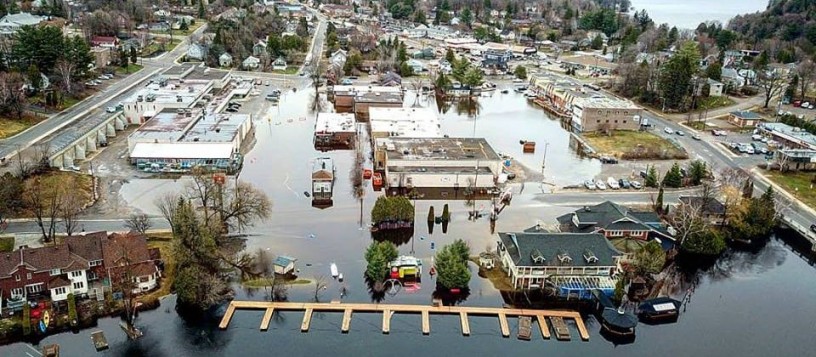
This year again looks starkly different. With the melting of snow from a winter of solid snowpack and several days of heavy rain, rapid movement of water across the bioregion has led to record flooding in several communities, flipping seasonal activities for many from preparation to protection. While the extent of the damage is unknown, accounts of boats slipping off lifts and floating across lake systems, docks and shorelines becoming submerged, and extensive road closures suggest that it will not be minimal.
The reasons behind severe flooding across The Land Between are cumulative. After the winter in a year of balance, some snowmelt will seep into the soil and recharge groundwater, some will travel across the land as runoff, and, later in the spring season, some will evaporate into the atmosphere. When systems are out of whack, particularly early on, the balance can be tipped, causing more water to run off than be absorbed by the land. This is typically the result of the snap between warm and cold that we have seen in recent years, consistent with a changing climate, compared to a gradual thaw, as the cold ground is unable to absorb excessive amounts of snowmelt during short bursts of warmth. When coupled with heavy rain, these factors, among others, can contribute to flooding.
There are other, more human-driven factors at play, too. In many areas, the balance between built surfaces, like patios and walkways, and natural features like vegetation and soil has shifted. Because vegetation and soil play a key role in absorbing and slowing water, this can influence how water moves across the landscape, particularly during years like this. Native plants, which are plants that naturally occur in an area, are especially well-suited to this role. While ornamental plants that are imported from other regions, including the typical lawn, do provide some support, their ability to meaningfully attenuate flooding is minimal compared to native plants that have evolved over thousands to millions of years in a given region. Nowhere is this more impactful within The Land Between than along the shoreline. As native vegetation disappears from shorelines and is replaced with ornamental plants and lawns or even fully hardened with gabion baskets or retaining walls, water makes its way much more quickly to lake systems than it otherwise would.
Additionally, and as we’re learning, where we choose to build our homes and cottages can have an impact. Throughout The Land Between bioregion, approximately 75 km2 of wetlands have been lost over the course of the last few decades to development. Because wetlands occur as dispersed patches, this represents a major hit to the region’s wetland network that is particularly impactful in mitigating the impacts of flooding, as wetlands act as nature’s sponge to absorb water and slowly release it into the ground as groundwater or across the land. Infilling wetlands to build homes and cottages can therefore have a direct impact on the ability of the surrounding area to manage excessive amounts of water, with the cumulative impact of multiple such developments in an area potentially immense.
There is another tool nature has to reduce the effects of flooding in addition to native vegetation, wetlands, and wildlife. Beavers in particular play a vital role in managing how water moves locally. Known as “ecosystem engineers,” beavers store and slow the movement of water through dam building, improving natural water management and reducing the impact of floods. Removing or relocating beavers, therefore, disrupts natural water systems, potentially weakening the landscape’s ability to slow and absorb water while increasing the risk of flooding.
When it comes to retaining and planting native vegetation, nature-focused development, and coexisting with wildlife, the benefits extend well beyond just flood attenuation. Excessive movement of water across the land can cause erosion that can result in further damage to infrastructure, degradation in water quality, and more. Additionally, when water can move through the landscape in a balanced way, more water is absorbed into the ground, recharging groundwater levels that a significant portion of residents in The Land Between rely on for drinking water and other household purposes. The natural control of nuisance wildlife like Canada geese and mosquitoes, maintenance of clear and healthy lakes, and the preservation of habitat for The Land Between’s iconic biodiversity are all additional benefits.
The damage caused by this year’s flooding will take time, effort, and resources to repair. As recovery moves forward, our ability to withstand future impacts is closely tied to how the landscape is managed. Fortunately, building resilience against these impacts involves the same qualities that have drawn people to The Land Between for generations in the first place—a rocky, rugged landscape left intact, where the character of the land can endure through time.

Don’t miss out on Doppler!Sign up here to receive our email digest with links to our most recent stories.
Local news in your inbox six times per week!
Click here to support local news
Kate Dickson is the Project Ecologist at The Land Between.
The Land Between is an expansive bioregion in Southern Ontario spanning the Muskoka and Kawartha region in the west to the Ottawa Valley in the east. Nominated in 2018 as a federal Community-Nominated Priority Place, The Land Between represents a final opportunity to recover and offer refuge to over 60 species at risk, along with other disappearing species like the loon, black bear, and moose in Southern Ontario.
It is also the name of the charity that is working to conserve and protect this vital and iconic landscape.

0 Comments